


Why a Crown Usually Comes After a Root Canal
A procedure that saves an infected tooth rarely ends the story there. Most patients who get a root canal in Gastonia are also told they need a crown afterward. That recommendation is not just an upsell tacked onto an already necessary procedure.
It comes down to what actually happens inside a tooth once the nerve is gone, and understanding that mechanism makes the extra step feel a lot less arbitrary.
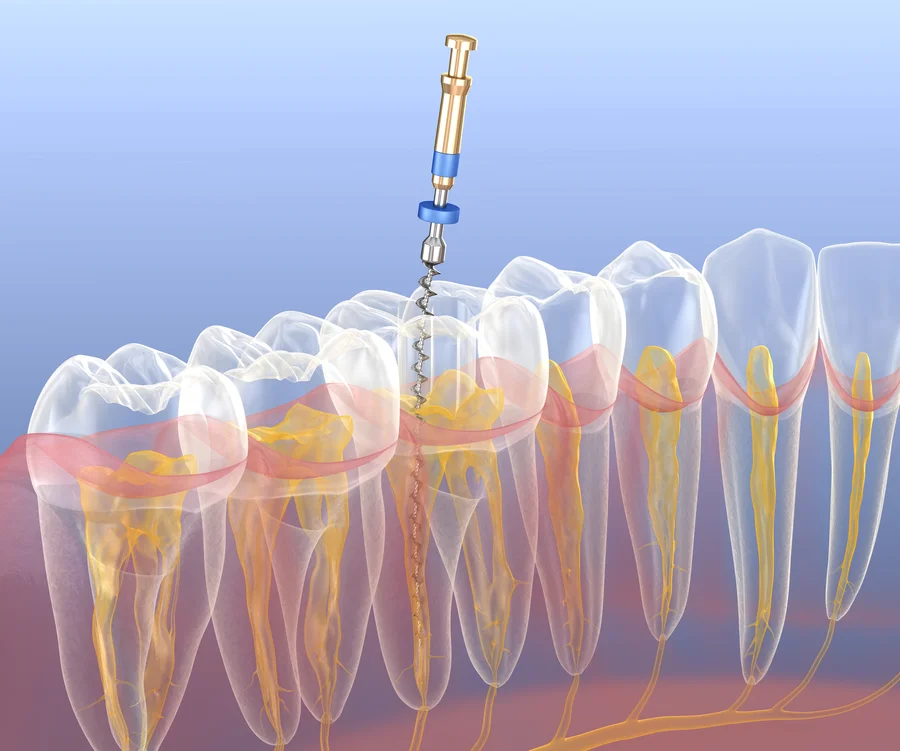
Why the Tooth Becomes More Fragile
Before treatment, the pulp inside a tooth supplies nourishment that helps prevent the surrounding dentin from drying out over time. A root canal removes the infected pulp, and according to the American Association of Endodontists, the tooth is then restored with a crown or filling so it can continue functioning like any other tooth.
Without that internal nourishment, the remaining tooth structure gradually becomes more brittle, which matters a great deal once you consider how much force a tooth absorbs every time you bite down.
This is one of the first things our patients ask about after a root canal performed at our Gastonia offices, since it is not always obvious why an extra appointment is needed once the infection itself has already been resolved.
Not Every Tooth Needs the Same Protection
Molars take the brunt of chewing, which is exactly why they almost always need a crown after root canal treatment, regardless of how much structure remains. Catching tooth decay early can sometimes prevent this entirely. Once a root canal has already been done, front teeth are a different story.
If only a small access opening was needed to complete the root canal, and the tooth was not already weakened by a large filling or deep decay beforehand, a more conservative option like a filling or an inlay can sometimes hold up well enough on its own.
That said, this is the exception rather than the rule, and it is a decision best made after an exam rather than assumed in advance based on which tooth is involved.
What Happens If You Skip the Crown
Skipping a recommended crown does not usually cause problems immediately, which is part of why it is tempting to put off, especially once the pain that brought you in has already resolved.
Over months or years, though, the tooth becomes increasingly prone to cracking under normal biting pressure. A crack in a root canal-treated tooth often means the tooth cannot be saved at all, rather than simply needing another repair.
Reinfection is also a real risk, since a cracked or compromised restoration can let bacteria back into a tooth that no longer has a nerve to signal early warning pain the way it once did, which means a problem can progress further before anyone notices something is wrong.
A few questions are worth asking your dentist before deciding whether to move forward with a crown or wait.
- Which tooth was treated, and how much chewing force does it typically absorb
- How much of the natural tooth structure remains after the root canal
- Whether a more conservative restoration, like a filling or inlay, is a realistic option for this specific case
- How soon should the crown be placed after finishing the root canal

Considering a Root Canal in Gastonia?
Drs. Ganglani, Johal, and Dunning walk every patient through exactly what their specific tooth needs, rather than defaulting to the same recommendation for every case. FRESHDental Gastonia can evaluate your tooth and explain whether a crown is the right next step after your root canal.
Contact us today if you are considering a root canal in Gastonia.